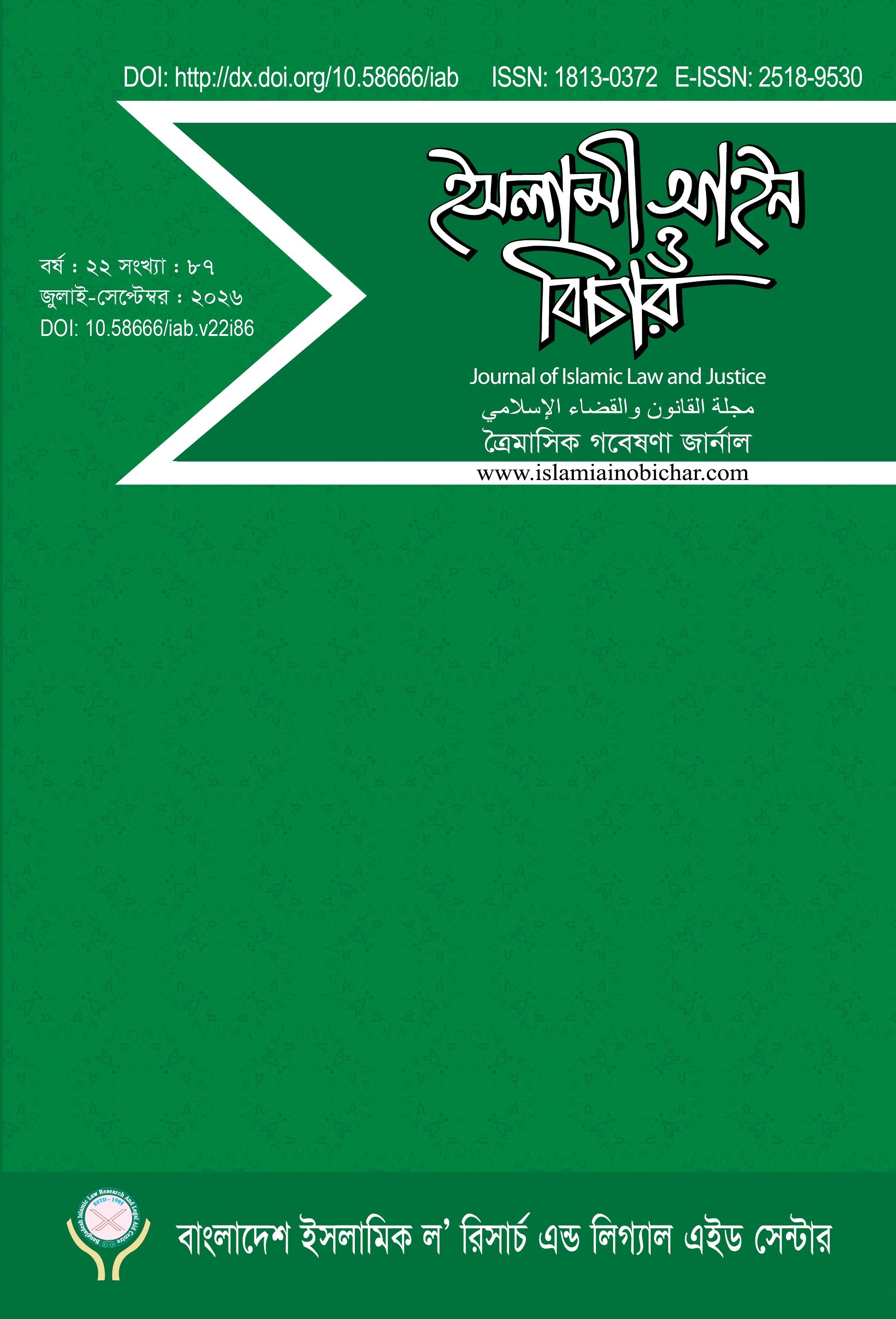
ফরমালিন নিয়ন্ত্রণ আইন ২০১৫ ও ইসলামি নির্দেশনা : একটি তুলনামূলক বিশ্লেষণ | Formalin Control Act, 2015 and Islamic Guidelines: A Comparative Analysis
DOI:
https://doi.org/10.58666/iab.v22i87.358Keywords:
ফরমালিন নিয়ন্ত্রণ আইন ২০১৫, জনস্বাস্থ্য ঝুঁকি, তাযীর, ইসলামি নির্দেশনা, Formalin Control Act 2015, Public Health Hazard, Ta‘zir, Islamic guidelinesAbstract
Formalin is a chemical solution of formaldehyde gas. Dishonest vendors primarily use formalin to preserve various fruits and fish for extended periods. Formalin inflicts multi-faceted damage upon the human body: when ingested through food, it causes significant harm, while its vapors induce headaches and various other ailments. Inside the human body, formaldehyde metabolizes into formic acid, which elevates blood acidity, triggers circulatory abnormalities, and can even prove fatal. Consuming formalin-laced fish, fruits, and fibrous foods can cause cancers of the stomach, lungs, and respiratory tract. To curb the excessive use of formalin, the Government of Bangladesh enacted the Formalin Control Act 2015. Despite this legislation, formalin continues to be widely used in food supplies, making it imperative to investigate the causes behind the law's shortcomings. In this context, the objective of this research is to conduct a comparative analysis between Islamic guidelines and the Formalin Control Act 2015 for regulating formalin usage in food. The study was conducted using qualitative research methodology. The findings reveal that the Formalin Control Act 2015 is inherently an effective statute for Bangladesh; however, a lack of public awareness and protracted legal enforcement processes serve as major barriers to its implementation. This legislation finds strong support in Islamic Shariah, which prohibits the adulteration and contamination of food in light of the Quran, Hadith, and Fiqh, rendering such acts punishable under discretionary penal provisions (Tazir). Ultimately, given that the majority of Bangladesh's Muslim population holds a deep affection and reverence for Islamic values, this research will play a positive role in fostering awareness in light of both Islamic directives and state regulations concerning formalin control.
সারসংক্ষেপ : ফরমালিন হলো ফরমালডিহাইড গ্যাসের একটি রাসায়নিক দ্রবণ। অসাধু বিক্রেতারা প্রধানত মাছ, তরকারি, সবজিসহ বিভিন্ন ফল দীর্ঘ সময় ধরে তাজা রাখতে ফরমালিন ব্যবহার করে। ফরমালিন নানাভাবে মানবদেহের ক্ষতি করে। ফরমালিন খাবারের মাধ্যমে শরীরে প্রবেশ করলে যেমন ক্ষতি করে, তেমনি ফরমালিনের গন্ধ মাথাব্যথাসহ বিভিন্ন রোগের কারণ হয়। মানবদেহে ফরমালডিহাইড ফরমিক অ্যাসিডে রূপান্তরিত হয়, যা রক্তের অম্লতা বাড়িয়ে দেয়, রক্ত সঞ্চালনে অস্বাভাবিকতা সৃষ্টি করে এবং এমনকি মৃত্যুর কারণও হতে পারে। ফরমালিন মিশ্রিত মাছ, ফল ও আঁশ জাতীয় খাবার খেলে পাকস্থলী, ফুসফুস এবং শ্বাসনালীতে ক্যান্সার হতে পারে। বাংলাদেশ সরকার ফরমালিনের অতিরিক্ত ব্যবহার নিয়ন্ত্রণের জন্য ‘ফরমালিন নিয়ন্ত্রণ আইন ২০১৫’ নামে একটি আইন প্রণয়ন করেছে। এই আইন থাকা সত্ত্বেও, খাদ্যে এখনও উচ্চ হারে ফরমালিন ব্যবহৃত হয়, তাই এ আইনের ব্যর্থতার কারণ খুঁজে বের করা অপরিহার্য। এ প্রসঙ্গে, খাদ্যে ফরমালিনের ব্যবহার নিয়ন্ত্রণের জন্য ইসলামি নির্দেশিকা এবং ফরমালিন নিয়ন্ত্রণ আইন ২০১৫-এর একটি তুলনামূলক বিশ্লেষণ এই গবেষণার মূল উদ্দেশ্য। গবেষণাটি গুণগত গবেষণা পদ্ধতি অনুসরণ করে পরিচালিত হয়েছে। গবেষণার দেখা যায়, ফরমালিন নিয়ন্ত্রণ আইন, ২০১৫ এবং ইসলামি নির্দেশনার মধ্যে জনস্বাস্থ্য সুরক্ষা, ক্ষতি প্রতিরোধ, প্রতারণা দমন, বাজার তদারকি ও অপরাধ নিয়ন্ত্রণের ক্ষেত্রে মৌলিক সাদৃশ্য রয়েছে। তবে অর্থদ-, পুনরাবৃত্ত অপরাধের শাস্তি, সম্পত্তি বাজেয়াপ্তকরণ ও অপরাধীর মৃত্যুর পর দায় আদায়ের ক্ষেত্রে উভয় ব্যবস্থার মধ্যে কিছু পার্থক্য পরিলক্ষিত হয়। সর্বোপরি, যেহেতু বাংলাদেশের অধিকাংশ মুসলিম জনগোষ্ঠীর ইসলামের প্রতি অনুরাগ ও ভালোবাসা রয়েছে, তাই ইসলামি নির্দেশনা এবং ফরমালিন নিয়ন্ত্রণ সংক্রান্ত সরকারি আইনের আলোকে সচেতনতা বৃদ্ধিতে বর্তমান গবেষণাটি একটি ইতিবাচক ভূমিকা পালন করবে।
References
Abū Dauad, Abū Abdullah Soliman bin Asas bin Ishaq assijisttani. 1420H. As-Sunan. Beirut : Maktaba Asriyah
Agency for Toxic Substances and Disease Registry, Toxicological Profile for Formaldehyde (USA: Agency for Toxic Substances and Disease Registry, U.S. Department of Health and Human Services, 1999)
Ajjawzia, muhamad bin 'abi bakr bin 'ayuwb bin saed shamsuddin ibn qiyam. ND. alturuq hukmia. Miśar: Mākatābātu sunnā āla muhām'mādiẏā
ajuddin ibna abdus salam, kawaidul ahkam fee masalihil anam (Bouruto : darun maarif, 1900)
Al-Bukhārī, Abū ‘Abdullah Muhammad Ibn Ismā‘il. 1422 H. Al-Jāmi‘ Al-Sahīh. Bourut: Dar At toukon Najat
Ali, Md. Zafar. 2022. ‘Uṯpādita khādapane bhejal pratirodhe rasulullah (Sm.)-er nirdesana’’, Islami ain O bichar, vol-18, Issue: 69&70
al-Kasani,Imam Alauddin Abu Bakr ibn Masud.badayie alsanayie fi tartib alsharayie (Bourut: 1989)
Amirul Islam, “Islamic Guidelines for Preventing Food Adulteration : The Food Vendor’s Practice Context”. 2024. Islami Ain O Bichar, vol. 19 (76). https://doi.org/10.58666/iab.v19i76.238.
Aẓ Ẓāhir, Khālid khalīl &Tabarrā’, Ḥasan Musṭafā. Niẓāmul Ḥisbāh: Dirāsatun fil Idāratil Iqtisādiyah lil Mujtama` Al `Arabī Al Islāmī. `Amman: Dārul Masīrah, 1997
Cogliano VJ, Grosse Y, Baan RA, Straif K, Secretan MB, El Ghissassi F, “Working Group for Volume 88. Meeting report: summary of IARC monographs on formaldehyde, 2-butoxyethanol, and 1-tert-butoxy-2-propanol”, Environ Health Perspect, 2005 Sept, vol. 113(9):1205-8
Dr. ahmad ali, Islamer shasti ain (dhaka : bangladesh islamic senter, 2015
Editorial Boad, Al-maoshu‘atul fiqahiyya (kuet : wazaratul awokaf oya al-sujun al islamiyah, 1995)
Editorial Board, sankhipto islami bisshokosh, (dhaka : islamic foundation bangladesh, 2007)
Ibn Mājah, Abū Abdullah Muhammad bin Yeajid. 1998. As-Sunan. Cairo: Dar Yahya Kutub al-Arabiyyah, Hadith no : 2341
Ibn Taymīyah, Taqī al-Dīn Aḥmad b. ʿAbd al-Ḥalīm. al-Fatāwā Al-Kubra. Beirut: Dār al-Kutub al-ʿIlmīyah, 1987
ibnul humam, Kamal uddin. fathul kodir sherhool hidaya (Bourut : darul fikar, N.D)
ibone abedin,Muhammad amin.raddul muhtar (Bourut : darul kutubil ilmiyah, 1412 H)
ibonu hibban, Muhammad ibonu hibban ahmad ibonu hibban ibonu maajo ibonu ma’bad, As-sahih (Bourut : muassaantur resalah, 1988)
Ibrahim ibonu farohoon, tabchiratul hukkam (Bouruto : darul kutubul ilmiyya, N.D.)
Imam Muslim, Abū al-Ḥusaīn Muslim ibn Ḥajjāj. 1999. assahīh. Beirut: Dār Iḥyā al-Turāth al-ʻArabi
kalaaji,Muhammad raoas.maoshuaatu fikhee umar ibonil khattab (Bourut : darun nafice, 1989)
Majedul Hoque, Arafath Jubayer & Iftear Kazim Rafi, “Food Adulteration in Bangladesh Becoming Most Common Health And Social Threat”, Italian Journal of Prevention, Diagnostic and Therapeutic Medicine, Vol, 8, No. 4
Mālēk, bin ānās bin āmēr. 1425. muẏāttā. ābu dābawi: mu'āsasāsātu jāẏēd bin sulatān
Ministry of Law, Justice and Parliamentary Affairs, Formalin Control Act 2015, Act No. 5 of 2015, (Dhaka: Government of the Republic of Bangladesh, 18 February, 2015)
Mortas, M., Awad, N. & Ayvaz, H. Adulteration detection technologies used for halal/kosher food products: an overview. Discov Food 2, 15 (2022). https://doi.org/10.1007/s44187-022-00015-7; Muhammad Ridho, Ayu Anggraini, & Yoli Oktaviani. (2021). Halal And Haram Food In Islam: Science Perspective . El-Faqih : Jurnal Pemikiran Dan Hukum Islam, 7(2). https://doi.org/10.29062/faqih.v7i2.269
Rezaul Hossain, Dr. Muhammad.& Mohammad Anisur Rahman, “Existing Legal Frameworks for Food Safety Management in Bangladesh : A Critique from the Perspective of Islamic Legal Maxims” Islami Ain O Bichar, vol. 22 (85), 2026. https://doi.org/10.58666/iab.v22i85.352.
Śāha'ōẏī, Ata. ND. Al Hisbah Fil Islam. Kuwait: Matbaah Dar al-Uruba
sarakhasi, Shamsul aimma muhammad ibna ahmad ash.usul al sarakhasi (hydarabad, N.D.)
Sarfaraj Hamid,Dr. Syed. “Food Adulteration in Bangladesh: A Step towards Development of Protection”, EBAUB Journal of Law, Vol: I, December 2019
Sharmin Aktar, “Food Adulteration and Awarness of Consumer Right Protection: An Empirical Study in Sutrapur and Dhupkhola Area of Dhaka City”, Jagannath University Journal of Arts, vol- 9, No. 2, JulyDecember 2019
WHO, WHO Guidelines for Indoor Air Quality: Selected Pollutants (Formaldehyde section) (World Health Organization, 2010)
Downloads
Published
Issue
Section
License
Copyright (c) 2026 Muhammad Mofazzal Hossain Rasel

This work is licensed under a Creative Commons Attribution 4.0 International License.